




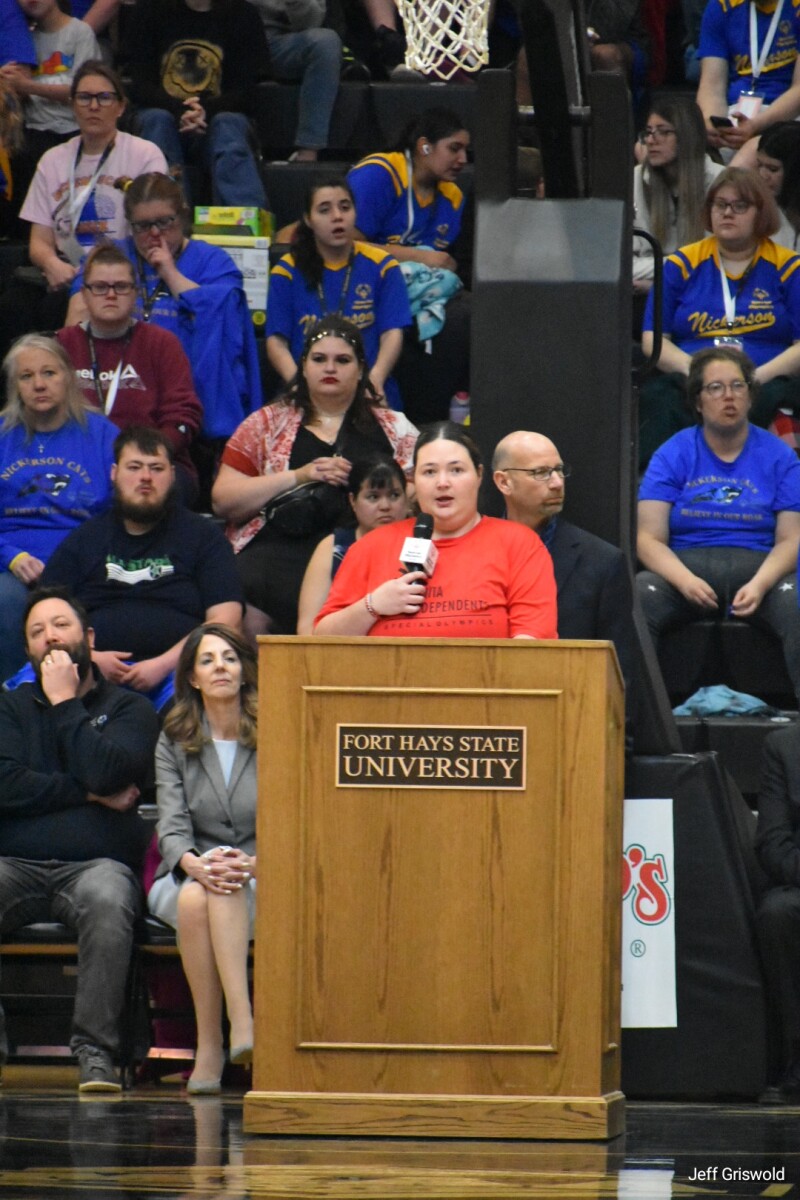
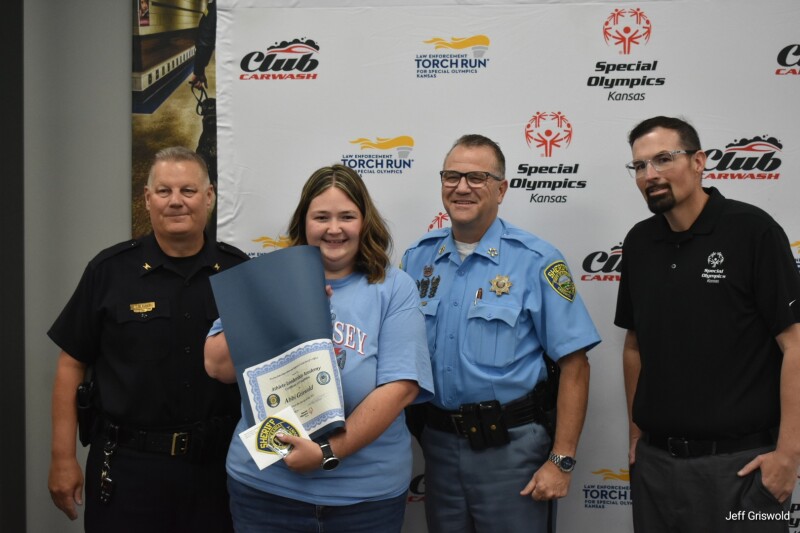
Hello, my name is Abbi Griswold. I have intellectual disabilities and am aware of the challenges they may present, but I am able to function as an adult. I serve as the Co-Chair of the Board of Directors for Special Olympics Kansas, While in High School, I was a member of the National Honor Society for two years; I don't consider myself retarded. My older brother, Tyler, also has intellectual disabilities.
A little History, in 2010, former President Obama signed a proclamation that, removed the term “retarded” and “mental retardation” from federal health and education policy and replace it with term “intellectual disability.”
The reason for selecting this topic is to address how society perceives individuals with intellectual disabilities and the impact of certain words. For example, when someone refers to a person with an intellectual disability using the term “retarded" it affects how that individual feels. To begin, it is important to define the term "retarded."
Retardation: an adjective:
- Slow to learn or develop mentally; finding it difficult to make progress in learning.1
- Less advanced in mental, physical, or social development than is usual for one's age.2
- very foolish or stupid.3
- i. A term can be offensive.
Medical definition:
- Retardation, also known as intellectual disability, is a neurodevelopmental disorder characterized by significant impairments in intellectual and adaptive functioning. It is typically present from childhood and affects a person's ability to learn, solve problems, and interact with their environment. 4
There have been numerous times in my life that I have been put down and called Rword. One of the first that I recall is, In Middle School. During PE class we were playing dodge ball, as I was about to throw the ball. I overheard some girls calling me the R-word. I honestly did not know what it meant, and to be honest, I did not know what to do. After Class, as I was packing my stuff up to go home; I heard the girls telling the whole locker room, calling me the R-word. I ran out and I had tears running down my face, I was hurt, embarrassed and seemed like no one cared. Not one person checked on me or stood up for me.
Another time in my life was during High School. When I was on the school bus, there were two boys which were friends of my oldest brother. Must have felt that being cool meant calling me the R-word and being mean. Each day, I did not want to get on the bus. They kept calling me the R-Word all the time, everyone was making fun of me and laughing at me. The bus driver even heard them; the driver did not do anything about it and even told me to sit down as I was causing trouble. The two boys smirked. I was embarrassed and humiliated. One day I got off the bus crying, and I finally told my dad.
The next day, he had a talk with the driver who picked me up, which did not help. My dad called the driver’s boss and my school principal. The boys were suspended from the bus for several weeks, and the driver was reassigned.
Honestly, do people feel good about themselves when they use the R word. It is hard enough to keep and meet friends when you have a disability, because of the way that we are. It is not okay to humiliate someone with disabilities. When someone calls a special needs person the R-word, it is offensive, and it hurts.
These experiences left a lasting impact on me, shaping how I view myself and others. The pain of being labeled and ridiculed simply because of my differences made me feel isolated and unworthy. Over time, I realized that what hurt the most was not just the words themselves, but the silence from those around me who could have stood up and made a difference. Even small acts of kindness or support can mean everything to someone who feels alone. No one should ever make fun, criticize or shun anyone for having intellectual, physical, emotional disability. Everyone is different and we all have our differences.
It is always important to provide an environment where we can maximize our potential and focus on what we can do, not what we cannot. We should not be judged on our IQ, but the person that we are. We also need to remind ourselves that once we say the words we cannot take them away.
For me, Special Olympics is a place for athletes to have an enjoyable time with one another.
Words have power, and the way we choose to speak about others can have a profound effect on their sense of self-worth. When we use hurtful words, especially toward those who may already feel vulnerable, we reinforce negative stereotypes and perpetuate exclusion. Instead, we should strive to foster understanding, empathy, and respect for all individuals—regardless of their abilities or differences.
Sources
1. Oxford Learner’s Dictionaries Online
2. Oxford Dictionary Online
3. Oxford Dictionary Online
4. Google AI
Here is a poem that I feel it goes well with this essay:
Why is the R-word harmful and Offensive
by Abbigale Griswold
So often, people use the word “retarded as a joke,
Like it’s funny
But that eight-letter word doesn’t define me
It doesn’t define ANYONE, it’s an outdate term
“But it’s politically correct!”
Maybe, in the 1970s, but not now
We’ve updated, upgraded, yet somehow
It’s still an everyday word used by everyday guys
Who think using the R word makes them look wise
Well, they're mistaken, as far as I’m aware
They need to realize that people truly care
I care, to be honest, I care a whole lot
Because our kids are coming home verbally shot
“You’re such a retard!” gets dropped on the daily
So much so, our kids are afraid to speak
For fear of being bullied…
It’s offensive to kids like me
It’s offensive in general, and quite uneccesary
Listen up men, it’s about to get scary—
Do you know how many adjectives there are for the word “stupid”?
Forty-nine, and that’s just in English
Not even counting words like “silly” and “dingus”
So why would you, a smart individual—
Try to be cynical, make a whole group of people miserable?
Make us seem invisible? No—not anymore.
We are invincible, unsinkable
And to think, it’s unthinkable
That you would stoop so low as to insult us
You don’t even KNOW us!
We are smart and bright
We’re full of light
And I will continue to write—
I will continue to fight
Until this word is dead and I’m forced to retire
But until then, I’ll spread this fire
I’m spreading the word to end the word
And maybe, one day, it’ll be unheardi
i Poem By Alea Gonzalez; Pervasive Parenting Resource
