

On World Football Day, Special Olympics is celebrating the power of football to do more than just score goals; it breaks down barriers, builds communities, and unites athletes as they work together to achieve a shared goal.
Through Special Olympics’ partnership with the United Nations’ (UN) Football for the Goals initiative and aligned with the UN’s Sustainable Development Goals (SDGs), football is becoming increasingly more inclusive with lower barriers of entry and better, stronger competition opportunities and enhanced coaching. Football truly is for everyone.
The Football for the Goals initiative is an inclusive space where federations, confederations, players, fans, clubs, and others in the field of football collectively employ the power of football to champion the SDGs. The long-term goal of this work is to put into place sustainable practices that will continue to make football a force of change where inclusion and sustainability lie at the heart of the sport.
The principles all members of Football for the Goals have agreed to include:
- Sustainability policies and practices
- Implementing and advocating for the SDGs
- A human rights-based approach, including in addressing issues of discrimination and avoiding discriminatory practices
- Equality and equity, including gender
- Climate action

Across all 7 Special Olympics Regions, there are more than 498,000 athletes competing in football, 169,000 Unified partners, and 53,000 coaches with over 19,000 competitions in 2025. Special Olympics East Asia leads the movement in number of footballers with over 86,000 footballers in China alone.
Of the almost 700,000 footballers across the movement, only 26% are female. Expanding the development and access to sport for women globally is a top priority for Special Olympics sport programming and a key part of the SDGs and Football for the Goals initiative. Special Olympics’ goal in relation to SDG 5 Gender Equality in football is to hit 40% female participation by 2030.
To achieve this mark, Special Olympics launched an ambitious five-year football development strategy which aims to rapidly increase the opportunities available to Special Olympics footballers to play the game.
As part of the football development strategy, a key objective is to significantly increase the numbers of partnerships between Special Olympics programs and their respective national football federations.
Special Olympics currently has 222 football programs across 190 countries with 94 of those programs having existing football federation partnerships. Additionally, Special Olympics has two Regional Football Confederation Partnerships in Latin America and Europe Eurasia.
Special Olympics Latin America and CONMEBOL have partnered to increase the reach and inclusion of football across South American countries while improving and growing their Unified football programs—programs where athletes with and without intellectual disabilities compete on the same team together.
Special Olympics Europe Eurasia and UEFA work together to carry out the same efforts in Europe through activations from the grassroots all the way through to the international competitions.
Through these partnerships with federations, Special Olympics programs receive support such as coach education, football equipment, access to facilities, and other vital components of football that increase access and inclusion for people with intellectual disabilities on the field.

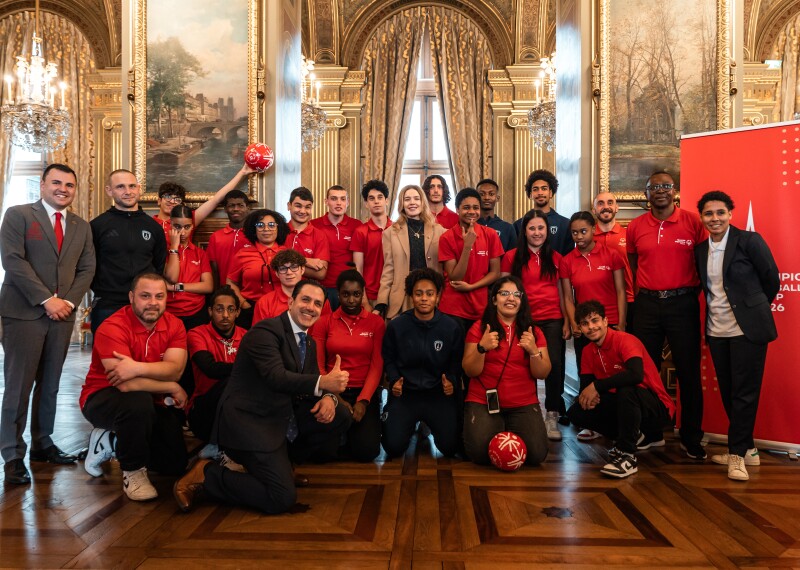
Special Olympics will take another step in achieving the goals of football development strategy with the hosting of the Unified Football World Cup Paris 2026. From 6 – 11 July, 324 footballers from 23 countries will descend upon France to compete for the Men’s and Women’s division’s title of Unified Football World Cup Champions.
As part of the selection criteria for the Cup, competing teams were evaluated and selected based on ongoing football development plans with their home Special Olympics Programs/country football clubs and national federations. This requirement ensures that participation in the Cup will extend far beyond the competition itself, serving as a powerful catalyst for sustained investment, expanded opportunities, and long-term growth of inclusive football in each country for years to come.
The growth of Special Olympics football programming is a direct result of the strong and meaningful support from football partners globally and lays out the groundwork for the next chapter of inclusive football.