

The launch event was held as part of the inaugural Special Olympics European Week of Families which is dedicated to celebrating families of people with intellectual disabilities and the essential role they play in building more inclusive and healthier communities. European Week of Families is supported by Lions Clubs International Foundation and the Samuel Family Foundation.
"I Hope Young Readers Feel Inspired"
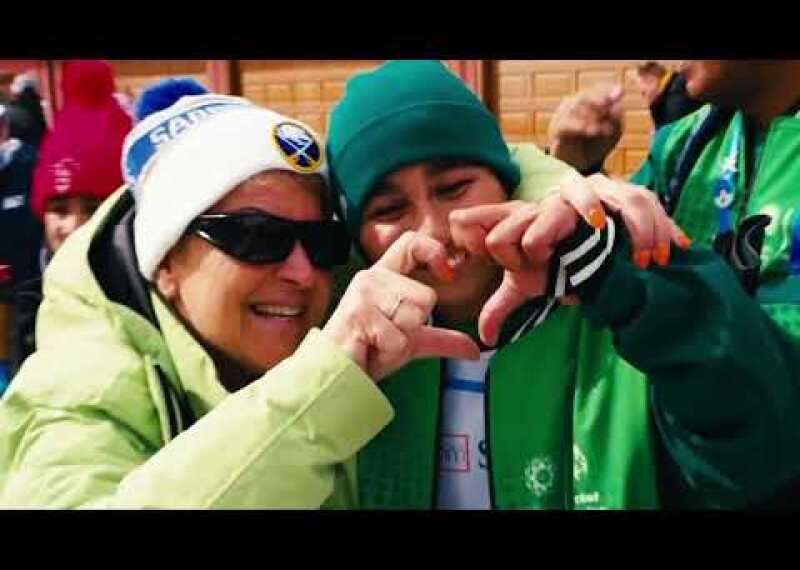
Anca’s book—which is aimed at children between three and six years old—follows her journey from the challenges of childhood to the success she achieved at the Special Olympics World Winter Games in 2025. Through this story, children and families discover a message about courage, perseverance, hope, and the importance of support from family and community.
Speaking about her book, Anca says, “Reading about my story as a child reminds me of how much support and friendship helped me grow. I hope young readers feel inspired to try new things and cheer for others too.”

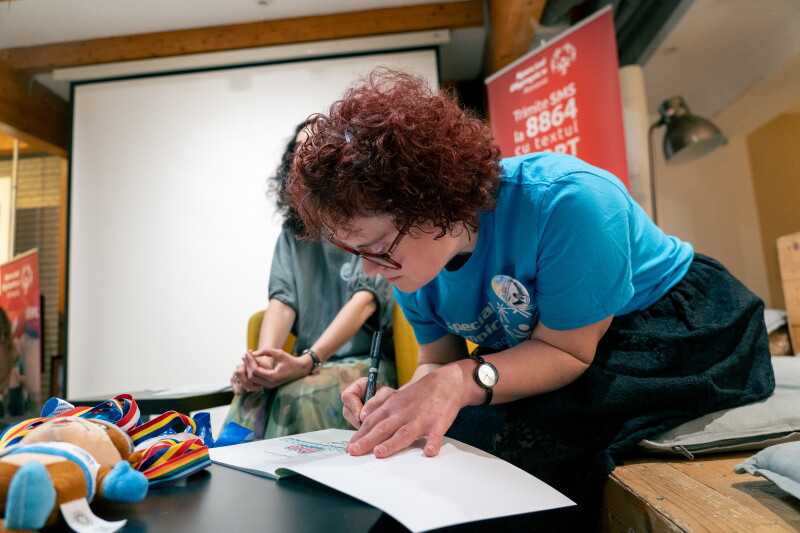
‘Anca’s Snowshoeing Adventure’ aims to bring the stories of Special Olympics athletes closer to the public and contribute to building a more empathetic and inclusive society. The launch event on Thursday included the official presentation of the book, discussions about family, inclusion, and the impact of sport in the lives of people with intellectual disabilities, as well as a book signing session with Anca Miron.
A Four-Part European Series
The three other books in this dedicated children’ series produced by Special Olympics Europe Eurasia focus on the stories of cross-country skier Eros Zanotti from Italy, figure skater Stephanie Gott from Great Britain and snowboarder Marcel Schilling from Switzerland. All four athletes also feature in a new documentary which will launch late this year.

‘Anca’s Snowshoeing Adventure’ is available on www.specialolympics.org in both English and Romanian.
The production and printing of the original book was co-funded by the European Union. The views and opinions expressed are solely those of the authors and do not necessarily reflect those of the European Union or the European Education and Culture Executive Agency (EACEA). Neither the European Union nor EACEA can be held responsible for them.