




Presented by:


Independence and Initiative Made Her the Right Choice for the SONA Conference
Nikilani Rojas of Special Olympics Hawaii is someone who makes things happen by leading others and following through.
It wasn’t always that way for Rojas. Like many new athlete leaders, she felt shy about speaking up and a little uncomfortable with giving directions to a group.
“I worked very hard in trying to overcome that,” she says.
She had been a swimmer for Special Olympics Hawaii when she talked to her swim coach about becoming a team captain. She had to become a certified swim coach to do it, and she did it—she became a team captain. Nikilani has made things happen for her Program. She formed an Athlete Leadership council on her island of Maui.
“Our athletes on the islands have to be very independent to serve as athlete leaders,” says Nip Ho, Senior Vice President of Program for Special Olympics Hawaii. “Niki was one of the very few who did what she was asked—she went back to Maui and started an Athlete Leadership council there. That independence and initiative is exactly why we nominated her to attend the SONA Conference.”
Nikilani’s job there was to help lead morning exercises to get people warmed up and ready for the day. She practiced high knees and heel digs at home for a full month before the conference. When it was her turn to direct the exercises, she did it confidently.
“I get to show I’m an example of what being a leader is all about, showing what our athletes can do.”
Athlete Voices Power the Message at the Corporate Partner Summit
Special Olympics athletes who are experts in leadership and public speaking are in demand at high-profile events such as the Special Olympics Corporate Partner Summit in Atlanta in May 2025. For the two-day conference, several Sargent Shriver Global Messengers from the North America Region served as speakers, moderators, and panelists.
For Five Athlete Leaders, the SONA Regional Conference Was a Model of Authentic Inclusion

Five Special Olympics athlete leaders were among the dozens of Program representatives at the Special Olympics North America (SONA) Regional Conference in 2025.
There was no special athlete track for them, no special name tags. They were full-fledged delegates, attending meetings, speaking up, asking questions, making contacts, and learning from others.
“That’s what all Program staff are there to do: they’re going to learn and then they’re going to go back to their program and implement changes and contribute new ideas to their programming and other staff members,” says Alyssa Cress.
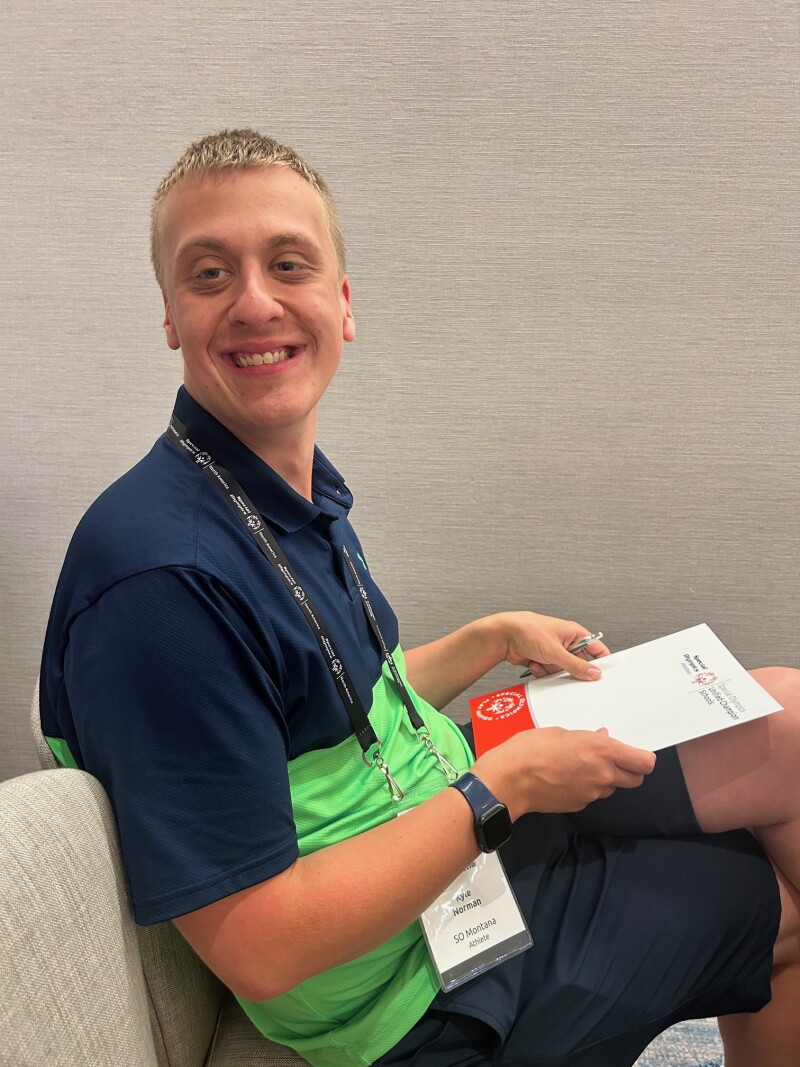
“I got to see how SONA operates,” says Special Olympics Montana Athlete Leader Kyle Norman. He came back from the experience more willing to speak up at his Athlete Leadership Council meetings—and the other athletes on the council have followed his lead.
“Now I’m actually cutting people off, because they’re talking too much,” says Kelly Herda, an Athlete Leadership coordinator for Special Olympics Montana.
“I Felt Like I had a Voice”
The SONA Conference was a perfect opportunity to show athletes contributing meaningfully as the leaders they are trained to be.
“Special Olympics Idaho could choose anybody to take to this conference, but the fact that they chose me was just like, ‘Wow! They believe in me. I can do it,’” says Courtney Lynch.
“I was able to see a different side of what Special Olympics is besides the competition, the games,” she says. “Every session had athletes in it, but I saw the athletes get involved, like, ask questions, and just be able to participate like other people. I felt like I had a voice.”
Athlete Leader Nela Polan of Special Olympics Colorado spoke during a coach education workshop about being a coach and an athlete. “I enjoyed it,” Nela says. “I was giving my opinion, and everyone was learning from me.” She also co-led a session called “Why Coach Development Matters!” at the conference. “I learned a lot about coach education and how important it is to teach them not just about the sport they are coaching but also how to work with people and be respectful,” Nela reported after the conference.
The Conference was a Catalyst for Ideas
Edward Kastern of Special Olympics Wisconsin was another of the athlete delegates.
“Ed is a leader within our team just like everybody else on the team. Ed has equal voice. He is always advocating, challenging us to do better,” says Chad Hershner, President and CEO of Special Olympics Wisconsin. “He prepared for this conference like he was preparing for the competition of his life.”
When he returned from the conference, Edward was excited and full of ideas for the Athlete Voice podcast that he co-hosts.
“I got a lot of good ideas about making sure we include the athlete voice of our rural communities and teams,” he says. “I was able to bring back ideas about this to my supervisor and team.”
“All of these athletes were experienced,” Alyssa says. “They had already served in leadership roles within their Programs. The training prepared them for this role.”


