

Three, two, one.
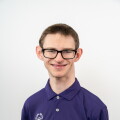
The lights are so bright I can’t help but squint my eyes. I took the advice Kevin Connors gave right before we went live: “Don't even worry about it; they won't even notice. Just be yourself and you'll do great!” Here I am, doing commentary at the 2026 Special Olympics USA Games Opening Ceremony, in the same booth where they call University of Minnesota football games.
Even though it was only for a week, working as a reporter for ESPN was everything I ever wanted. My favorite part was doing the commentary with Jen Lada and Kevin before and after Opening Ceremony. Doing something like that was unimaginable. It still feels like it didn't happen, but it did.
When I co-hosted the Opening Ceremony with Jen and Kevin, they let me go off the cuff and share my first-hand experiences as a Special Olympics athlete. As the Ceremony went on, I felt more comfortable in the moment.
The producer, Bill Bonnell, was in my ear telling me what was coming up next in the program. He'd give us information like what state was coming up, if there were any interesting facts about the Program we should focus on or if there would be a story about an athlete to focus on. I couldn't respond to Bill because then you would hear it on live TV. So, I just did what he instructed me to do.
I really felt a part of the ESPN team.
For much of the week, they had me working on two segments. One segment was called “Around the Games” where I go around the Games and report on several of the sporting events. Then the second one was the idea that I pitched to ESPN. I had the opportunity to interview the parents and siblings of the athletes. I worked mostly with ESPN field producer, Natiyah Johnson. I learned a lot from her and her camera team about how to do interviews and how to do stand-ups by yourself.
Stand-ups were the hardest part for me. Before I went to cover the competition, I had to stand in front of the camera and do an opening segment. So, something like "Hi I’m Wyatt Spalding reporting to you from Minnesota for the USA games. Come join me as I report on soccer" to start it off. Then, in the middle, I could say whatever felt right in the moment for that piece. Then I had to remember certain lines of what to say at the end of the piece, like "come join me as I report around the games", so I had to memorize all that and make it sound natural in 30 seconds or less. What I really appreciated about Natiyah and the camera crew that we worked with was that they treated me like any other employee at ESPN. They encouraged me all the time and gave me a lot of constructive feedback on what I could do better in my pieces.

I got to shadow Jen at flag football. I learned a lot by watching Jen and Maurice Jones-Drew report on the flag football games. I learned a lot about how they study the teams and players. What I really took away from that experience was that this is a job where there's a time to be serious so you can get your work done. But then there’s also times where you can have fun talking sports with your friends.
When you work with ESPN, the first thing you think of is that it seems intimidating. You’ll let it get to your head that you don't know as much as they know about the industry. So you're afraid to mess up, and you doubt whether you can do the job. But when I first met everyone at ESPN, they were so inclusive and made me feel a part of the team.
What I realized through the job industry, which anyone needs to do but maybe even more when you have a disability, is that you must keep pursuing what you want even if you get turned down repeatedly. I really wanted this retail job, which was at a sporting goods store. I started applying for this job in the spring of 2016, and I didn't get hired until the spring of 2018.
Every three to six months, I'd come back and see if they had a job opening; I would just keep coming back and filling out the application repeatedly. I even got an interview one time and still didn't get the job. But that didn't stop me from coming back again a few months later and applying again. This time I got another interview and ended up getting the job. I worked at that sporting goods store for almost four years.
What I learned from that experience in the work field as someone with a disability is that you have to try to make things happen for yourself. Sometimes it’s going to take longer for us to get the job or career we want.
When I was reporting on a soccer game at the USA Games, I was thinking to myself, "This is it; this is what I want to do with my life."
I want to become a sports reporter. I don't know how I'm going to do it, I don't know how long it will take, but I'm going make it happen.
That's the thing I think people sometimes don't realize about us. We may have challenges, physically or intellectually, but we are some of the most resilient people you will ever meet. We’ve been through a lot more than just getting rejected by the job industry. Even though it was only a week on the job, working for ESPN opened my eyes to see what is possible for me. Just like the sporting goods job, no matter how many times I get rejected, I’m going to keep coming back.
Because I know I can do the job.