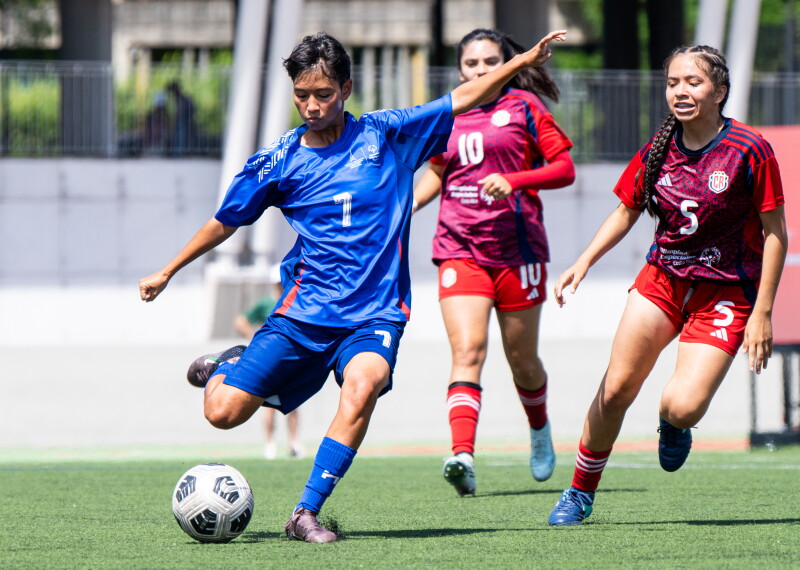


To understand how Special Olympics delivers sport and how the movement continues to grow inclusive sport globally, it is important to understand the role of sport partnerships.
Sport partnerships are strategic collaborations with international, regional, and national sport and multi-sport governing bodies—such as the International Volleyball Federation (FIVB), Union of European Football Associations (UEFA), International Ski and Snowboard Federation (FIS), and many more (pictured below).
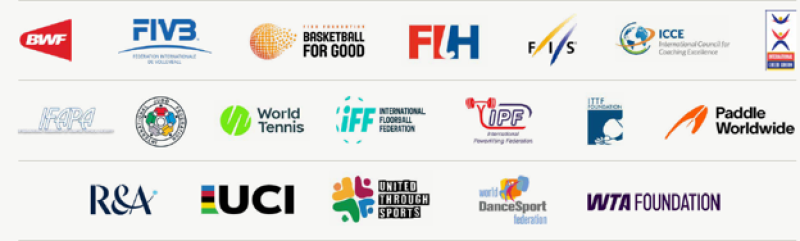
These partnerships connect Special Olympics organizations at every level, from Special Olympics International all the way down to individual national programs, with the traditional sport structures that already govern, fund, and deliver sport.
Sport partnerships are catalysts for meaningful impact: they help athletes build confidence, form friendships, and improve physical and mental wellbeing. By expanding access and deepening local participation, these partnerships break down barriers, strengthen communities, and move us closer to a world where everyone, regardless of ability, can experience the benefits of sport.
At the heart of our mission, these partnerships deliver high-quality, impactful sporting experiences that transform the lives of people with and without intellectual disabilities. They also push traditional sport structures toward full inclusion, creating lasting structural pathways for people with intellectual disabilities to participate in local clubs, teams, and sporting associations long after any single program or grant has ended.
Special Olympics follows the guidelines and rules set forth by International Sport Federations and hosts major events including the Special Olympics World Summer and Winter Games, as well as global single-sport competitions such as the Unified Football World Cup and Unified 3x3 Basketball World Cup. Beyond these competitions, sport federation partnerships are focused on growing sport at the local grassroots level for people with intellectual disabilities, so that everyone can experience the benefits of sport, with input, education, resources, and guidance from the governing body sport partner.
What Does That Actually Mean?
It means that when you attend a Special Olympics World Games and witness any number of sport competitions, the technical official onsite will be from that respective sport’s international governing body, the athletes competing will follow the rules and guidelines set forth by the governing body, the coaches will have gone through education, coaching, and certification courses in conjunction with the governing body’s coach standards, and the event will uphold the technical standards of the competition to align with the governing body’s as well.
At the Special Olympics World Winter Games Turin 2025, the floorball competition during that Games was the largest international floorball tournament to ever take place, regardless of ability level. The competition met every standard of the International Floorball Federation’s (IFF) and was a testament that sport partnerships, with governing bodies such as the IFF, are massively impactful for raising the bar on what inclusive sport looks like and what can be achieved through it.
Many of the athletes competing at events, such as Special Olympics World Games, will come from a program where these partnerships are the sole reason for them being able to participate in their sport. The sport partnerships Special Olympics programs have are a key reason for the movement’s success and growth so that people with intellectual disabilities in all areas of the globe have a fun, safe environment to compete.
Don’t Believe What You Read? Take a Look at the Numbers.
Special Olympics is launching its most up-to-date Sport Partnerships Survey: The Partnership Effect. This survey examines each Special Olympics regional and national Program so that a complete outlook and scope of the sport partners established and maintained at all levels of the organization can be best understood and utilized.
Globally, Special Olympics has 1,376 sport partnerships established with international, regional, and national federations across 163 Special Olympics national programs. These partnerships generate over USD $8.3 million in value-in-kind (VIK) support.
Over the last 7 years, the number of national programs reporting on a sport partnership has increased by 91.8% (from 85 to 163) and the number of national partnerships they have reported on has also increased going from 528 to 1,311 (148.3%). On average, that is a growth of 8 partnerships per program from 2018 – 2025 and over 100 partners a year.
| Metric | Then | Now | Increase |
| National Programs reporting a sport partnership | 85 | 163 | +78 programs |
| National Sport Partnerships | 528 | 1,311 | +783 partnerships |
Sport partnerships are the lifelines for many Special Olympics national programs who shared that they would not be able to offer at least one or more sports if it was not for their partnership with a federation.
A total of 290 sports (44 unique sports) across these programs simply would not be offered and would otherwise be unavailable to athletes in those countries. Eight programs mentioned that the sport would still run, but that the quality of the offer would be at a much lower level.
“Of the 127 national programs that report a partnership with their national sport ministry, an estimated $9.5–9.9 million in combined direct and in-kind government support was identified.”
Not only do federations aid inclusive sport for all at Special Olympics events; they make their own events and competitions more accessible as well. In 2026 alone, approximately 1,000 Special Olympics athletes will have competed in an international or regional competition opportunity made possible by sport partnerships.
These competitions include FIBA Foundation 3x3 Open, ICU World Cheerleading, World Classic Open Powerlifting Championships, FIH Para Hockey World Cup, IJF Sarajevo World Judo Championships Kata, World Sailing Inclusion Championships, and the ICF Paracanoe World Championships.
These opportunities exist because federation partners have chosen to open their competition structures to Special Olympics athletes, not as a separate, parallel track, but as genuine access to the same stages where the rest of the sporting world competes.
While Special Olympics benefits immensely from the sport partnerships it has cultivated, these partnerships are mutually beneficial to both parties.
As Special Olympics continues to learn and expand with the help of its sport partners, the partners are also learning, adapting, and expanding with the help of Special Olympics—making their sport and the global sport community more accepting and accessible to all. The movement brings visibility to different markets, helping increase the global footprint of the sport, inclusive sport, and inclusion in all parts of life.
Special Olympics has also been given a voice at a leadership level of many of their sport partnerships, influencing more inclusive policies within rule structures, coaching streams, equipment, educational resources, and other impactful areas of the sport.
“The sports with the deepest bench of federation partnerships are also experiencing steady growth in athlete participation, as athletes increasingly become part of their sport community in their own countries.”
Regions With the Most Partnerships (by % of Programs)
| Rank / Region | Partnerships | Partnership per Program |
| 1 Europe Eurasia | 577 | 10.3 |
| 2. Latin America | 167 | 8.4 |
| 3. East Asia | 43 | 7.2 |
| 4. North America | 122 | 5.5 |
| 5. Asia Pacific | 143 | 4.8 |
| 6. Africa | 167 | 4.5 |
| 7. Middle East / North Africa | 92 | 4.2 |
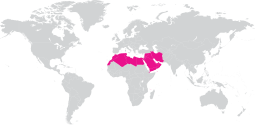
Regionally, Special Olympics Europe Eurasia leads the movement with about 10.3 partnerships per program. They are followed by Latin America at 8.4 and East Asia at 7.2. North America, Asia Pacific, Africa, and the Middle East North Africa follow more closely together, in the 4-to-6 range. East Asia’s ratio is built on a small number of total programs (6), meaning it should be read as directionally strong rather than statistically comparable to larger regions like Europe Eurasia. Read together, these metric points to where partnership building is deepest relative to the size of a region’s program footprint, rather than simply where the movement happens to have the most programs to begin with.
Collectively across the movement, the top three sports with the most international, regional, and national partnerships are: athletics (101), football (soccer) (99), and basketball (82).
Special Olympics International’s international federation partners are ranked in quantity from basketball (82), badminton (67), and table tennis (59).
Two of the repeating sports in popularity in the survey are basketball and football, which Special Olympics has hosted Unified World Cups in both those sports in the last year with the help and guidance of their respective sport partners.
Dive into more of the 2025 Sport Partnerships Survey to learn even more about the ways in which Special Olympics globally, including its regional offices and national Programs, utilize sport partnerships to continue to expand and better inclusive sport opportunities around the world.
The Partnership Effect: 2025 Special Olympics Sport Federation Partnership Survey Report
Download Report (PDF)