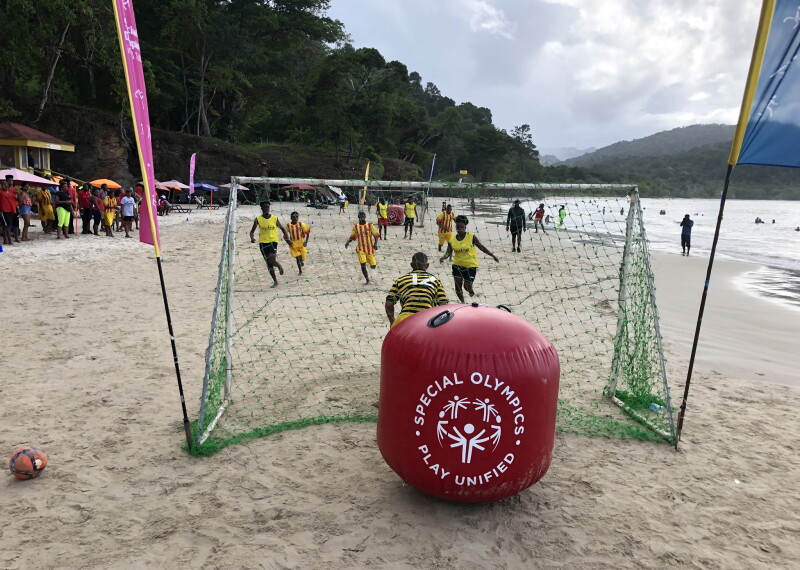


This November, athletes from across the Caribbean will come together in Jamaica for a first-of-its-kind opportunity in the country, the Special Olympics Beach Games.
From November 19 – 21, athletes from 20 Special Olympics Programs across the Caribbean will compete in beach volleyball, beach bocce, basketball and more, while other activities, including the Motor Activity Training Program (MATP), health screenings, and family programming will create opportunities for athletes and families beyond competition.
But before the athletes arrive and the Games begin, Athlete Leaders are already helping make it happen.
For David Duncan, an Athlete Leader with Special Olympics Jamaica, that means doing far more than preparing to compete.
“My role, I'm working with Special Olympics Jamaica. I currently work with Special Olympics, so I'm helping to register the Jamaica team, to get them ready, make sure that all the paperwork is done in the background.”
Duncan won't be playing in the games himself. Instead, he is helping the beach volleyball team prepare, working with players and coaches, introducing them to beach volleyball and helping make sure they understand the rules and are ready to compete.
And Duncan isn't the only Athlete Leader taking on a new role. Former athletes are stepping into coaching positions, helping teams prepare and taking on responsibilities behind the scenes. Some Athlete Leaders will also serve as officials, including trained officials working in bocce, while others will contribute as volunteers and help make sure the overall event runs smoothly.
“Athlete Leaders have been included throughout the planning process, with Duncan playing an especially active role in shaping the Games and encouraging the Local Organizing Committee (LOC). Their involvement will be particularly visible in volleyball, where Athlete Leaders will take on key coaching and officiating responsibilities.”
Athlete Leadership, Duncan says, gives athletes an opportunity to take the experience they have gained through sport and use it in new ways.
“It's important because the athletes, it's something meaningful to do,” Duncan said. “And also they have gained a lot of experience playing the sport, and that gives them a chance to give back and also to develop.”
That development can happen in coaching, administration, planning, officiating, or any number of other roles.
“Involving athletes in these responsibilities has brought fresh ideas and a deeper sense of purpose to the planning process,” Bell said. “They understand the needs and expectations of athletes because they have lived the experience themselves,” Bell said. “Their ideas help us to make better decisions about competition, accessibility, communication, and the overall athlete experience.”
“We can work alongside in the background of the plan to put together a Games,” said Duncan. “This will help us showcase Special Olympics Jamaica, the Caribbean, and the world the potential that athletes have beyond just being a person who can play a sport.”
The opportunity to help plan the Beach Games has also changed the way Duncan sees his own role. As an athlete, his focus was primarily on his team and his performance. Now, he has to consider the many pieces that have to come together to create an experience for athletes.
“It's different. It makes you understand part of what goes into, as an athlete, concentrating on your role on the team and your performance. But now you have to take into consideration other things.”
That different perspective has also given him a way to advocate for athletes based on his own experiences.
“As an athlete, we might have had certain struggles or certain things we didn't like. Now that I'm in this position, I can voice it to see if it can be changed, to make it easier for the athletes. As an athlete, it kind of makes it easier to speak to the current athletes. They're more willing to open up and to tell you and to get relaxed and play and be more comfortable.”
For Bell, that firsthand knowledge is one of the most important benefits of involving Athlete Leaders in the planning process. Their contributions help the organizing team consider the event from the athletes' perspective and make decisions that better reflect their needs.
That kind of meaningful participation is important to Duncan because he has also experienced the other side, situations where an athlete may be invited simply to appear without having a meaningful role in the work.
“I've been in situations that sometimes they just want an Athlete Leader to speak or to show up in a picture for the recognition, just to say an athlete was there. But to move beyond that and to be a part of the planning, it shows progress.”
The Beach Games, he says, are an opportunity to demonstrate what athletes can contribute when they are given that chance.
“It shows that Jamaica is beginning to open up and the world as well, to see the potential,” said Duncan. “It's a good stepping stone for athletes here, but it's around the world to show that your potential can be used in a meaningful way as long as persons are willing to work with you and to understand and lead in a unified process.”
“I believe the Athlete Leaders' ideas and involvement will help ensure that the Games reflect the principle of inclusion, not just in who participates, but in how the event is planned and delivered,” said Bell.
The work to make that vision a reality is well underway. In the weeks leading up to the Games, Duncan is focused on finalizing registration, arranging transportation, meeting with local partners in Montego Bay, and completing preparations with hotels and venues.
“It's like a rush now to get everything ready, to get the venue ready, to get the persons ready. It's a lot of work, but it's good,” said Duncan.
There is also a sense of history behind the work. Duncan first learned about Beach Games in 2019, when he traveled to Trinidad with his volleyball coach for a Beach Games training. They learned what the concept was and how to organize the event. Last year, Trinidad hosted its own Beach Games, providing an example that Jamaica can now build upon.
“Last year in Trinidad they had their Beach Games. So that was the first real run in the Caribbean,” Duncan said. “We are working alongside Trinidad because they have the experience, to make sure that we follow the process and it can be the best it can be.”
The Beach Games will also provide opportunities that extend well beyond the competition itself. Duncan is particularly excited about the Motor Activity Training Program, which will give athletes with significant disabilities opportunities to participate in physical activity and showcase what they can do.
“Those athletes with severe disabilities, they rarely get opportunity to really engage in sports or in full exercise,” Duncan said. “So for them to showcase, I think it's very good.”
Health will be another important component. Healthy Athletes screenings will be available during the Games, including opportunities for athletes from communities in western Jamaica that were affected by Hurricane Melissa in October 2025 to receive health services.
For families, the Games offer another meaningful opportunity, the chance to see their athletes compete close to home.
“The parents never really get to see their children competing at a high level,” Duncan said. “So now that it is in Jamaica, it's accessible to them. And that will be something very good for the parents to see them first, and we don't have to travel.”
Family sessions and training are also being planned, with families from across Jamaica expected to take part in activities surrounding the Games.
The concept of the Beach Games just feels natural.
“People go to the beach, have fun, but also play sports on the beach,” said Duncan. “So now to have it in Special Olympics in a uniform way, to have it as a sport, competing in it, it's good, and it's something that we can build on.”
With the Games approaching, that sense of possibility is at the heart of what Duncan hopes Jamaica will experience when the Caribbean comes together on its shores.
“I'm hoping that Jamaica and the persons will come out and give full support and that it will cause more persons with ID and their parents and caregivers to bring out their children and not to keep them away, not lock them away, but to see the potential in them, to be more proud of them.”
He hopes that greater visibility will lead to greater participation, not just in Special Olympics, but throughout society.
“When they come and they see, they will be amazed and it will help to remove some of the stigma.”
For Bell, the impact of the Games will ultimately be measured by more than the medals awarded or the number of athletes who participate. She hopes the event will leave a lasting legacy in Jamaica, creating more opportunities for people with intellectual disabilities to participate in sports and take on leadership roles in their communities.
“A key part of that vision is establishing a strong, sustainable committee to support the development of Special Olympics across four western parishes: St. James, Hanover, Westmoreland and Trelawny,” said Bell. “The committee would help recruit and train athletes, coaches, officials and volunteers, build stronger partnerships with schools, communities and businesses, and create more opportunities for Athlete Leaders.”
By the time the Beach Games begin, Duncan and other Athlete Leaders will have spent months working behind the scenes to help bring them to life. But the moment he is looking forward to most isn't a particular competition or result.
It's seeing everyone there.
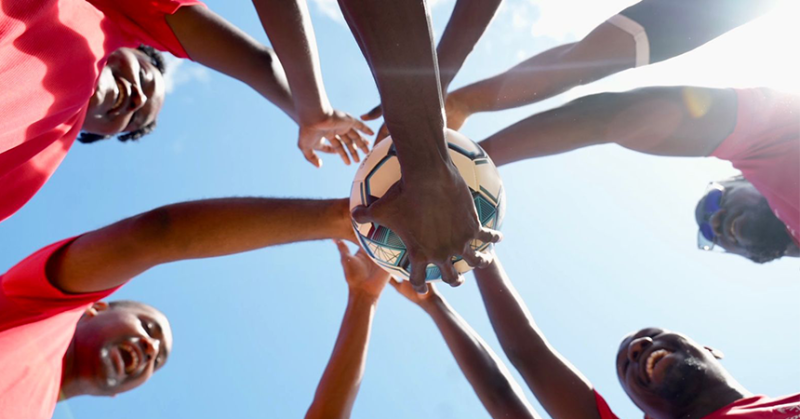
Athletes. Families. Coaches. Volunteers. Officials. Athlete Leaders. Programs from across the Caribbean.
“It's going to be a very proud moment, very heartfelt moment, something we've always been looking for,” Duncan said.
And that may be the clearest picture of what these Games represent, not simply athletes coming together to compete, but athletes helping build the event, shape the experience, and show what is possible when they are given the opportunity to lead.