





On February 1st, 2026, about fifteen athletes from Special Olympics Connecticut - North Haven walked into Choate Rosemary Hall’s Larry Hart Pool, and about thirty Choate students were already in the lobby waiting for them. We warmed up first, and then we paired each Special Olympics athlete with a Choate swimmer. People swam a few easy laps, learned each other's names, and showed off their favorite “cellys” (celebrations done after winning a race). Then we ran relays, and nobody won them. Everyone got a medal, which was the only result any of us wanted. Afterward, everyone walked across campus to the dining hall and ate a meal at the same tables, and to this day I still remember the feeling in the air as the best there ever was.
It took a year and a half to get to that afternoon.
My name is Josh, and I’m a senior at Choate Rosemary Hall, a swimmer, and the student who started the Choate Special Olympics Project here. The reason why it took so long has a lot to do with what private schools are and what they could be for this movement.
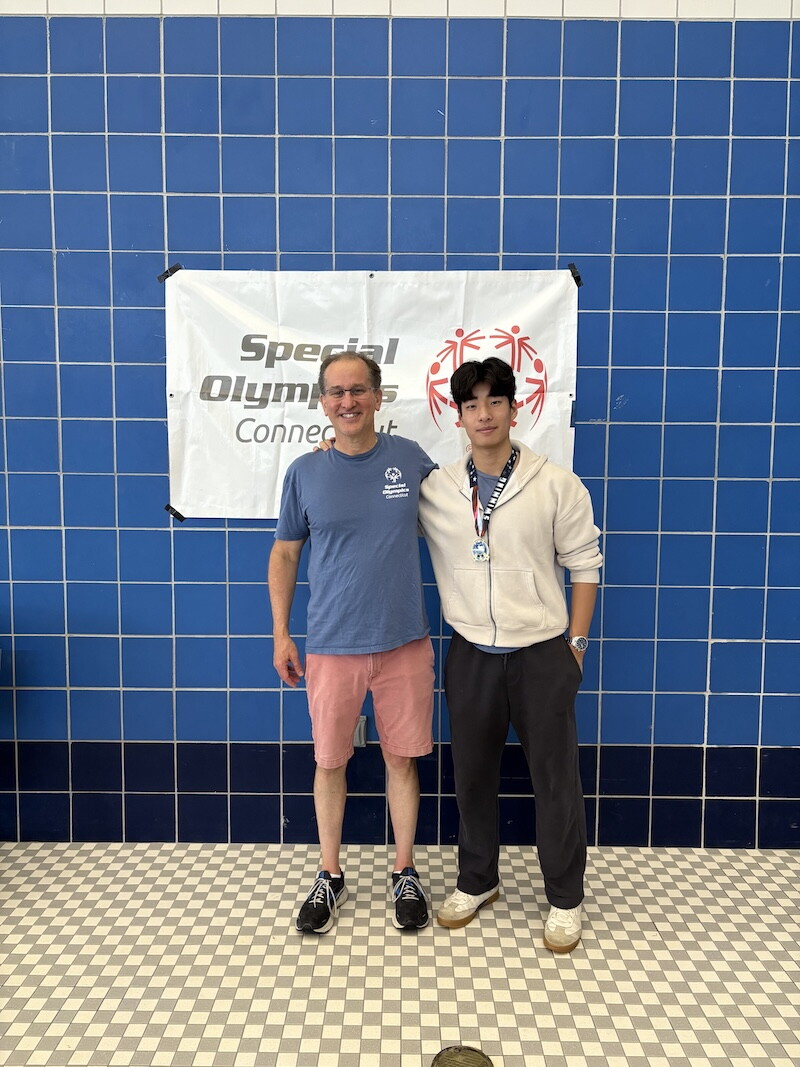
I met Keith Moon in eighth grade. I was a swimmer visiting the Hotchkiss School as a prospective student, and he was the head coach. He was so relentlessly enthusiastic about having a clueless fourteen-year-old on board that I remembered him years after I chose a different school. Keith has spent more than thirty years building Special Olympics programming inside boarding schools. He is in the Special Olympics Connecticut Hall of Fame. He also finished his doctorate this year, in the middle of all of it. None of that is what makes him unusual to me. What makes him unusual is that he has never once been too busy for me. He has FaceTimed me straight off the pool deck after coaching a practice, hair still wet after swimming in the Hotchkiss pool, to talk through a scheduling problem at a school that isn't his.
In the fall of my sophomore year, Keith invited a group of Choate swimmers to the Hotchkiss Swimathon for Special Olympics Connecticut (SOCT). I went partly because I was looking for something. I started swimming at five and had built most of myself around it, and by that fall, exercise-induced asthma had cut my practices to thirty minutes. In open water, Choate and SOCT athletes were indistinguishable from a distance. Nobody was timing anyone. Swimming was something I was giving away instead of extracting from, and that had never once been true for me before. I got on the bus home already thinking about how we could replicate that feeling at Choate.
Then I spent the entire winter failing to accomplish anything. I reached out to Keith, we started planning, and the logistics beat us. The pool was booked. Dates collapsed. We pushed it to junior year. The following fall I went back to the Swimathon on my own and swam in it, then drove back to Hotchkiss again later that same term for another one. February 1st was the third attempt at a first event.
Here is the part I told David Evangelista, President and Chief Executive Officer of Special Olympics, when we spoke this summer. He laughed, so I'll put it in writing. Private school administrations have a reputation for smothering student projects, and having now spent a year working through one, I'd actually defend them. They are not villains. They are people who get pitched twenty stunningly ambitious projects a term by seventeen-year-olds with no logistical plan and no intention of maintaining anything past graduation. Half of those projects die the same month their founder walks. If you are an administrator, "no" is a reasonable default. So I never tried to argue that my idea was good. From the first meeting, I was trying to prove it would outlive me. Most of that work was unglamorous. Before anything was approved, I walked the administration through the entire event start to finish, hour by hour, from the arrival of the SOCT athletes to warmups to relays to the last person leaving the dining hall. Enthusiasm doesn't get a project approved. A plan nobody else has to fix is what gets a project approved, and once they could see the whole day laid out on one page, they trusted me to run it. This spring, the Choate Special Olympics Project became a recognized club with a permanent leadership structure written into how it operates, so a successor inherits an institution that already runs instead of an idea they have to build from scratch.

All that work was worth doing because of what a school like Choate can put behind a program once it's on board. Choate has a pool, a track, tennis courts, and a cross-country course that sit unused for parts of the year. Boarding schools are built with facilities that most communities cannot access, which means we are sitting on exactly the infrastructure Special Olympics Programs need most and rarely have. We also have money. When my project needs to feed sixty people or run four sports across three terms, there is a budget for that, and large-scale events stop being just a dream. None of that was the hard part.
Choate requires every student to complete ten hours of community service, and a requirement is very good at producing engagement, which is a polite word for attendance. It is not good at making anyone care. A student can stand on the pool deck for two hours, sign the form, and leave without learning a single athlete's name. What I want is the student who learns the names, asks when the next event is, and turns up in the spring without being asked. A school can mandate attendance. It cannot mandate interest, and interest is the only thing that tells you whether the project is working.
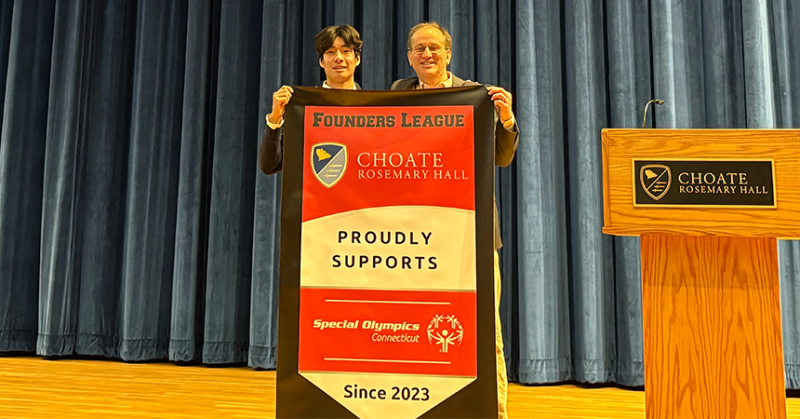
Where this goes next is unfinished. I am interviewing juniors now to take it over, and the only thing I am really screening for is whether they want it, because that is the one part I cannot hand them. Keith and I are working on a second Connecticut boarding school, and if it adopts a version of this model, there is a path across the rest of the New England Preparatory School Athletic Council (NEPSAC). It may not work the first time. It didn't for us. The difference between a one-off and a successful program is that somebody insisted on a second attempt.
If you go to a school like mine and you have been assuming that Special Olympics belongs to somebody else's community, you are wrong. Keith gave me a phrase I have not been able to stop thinking about: lift where you stand. He has been doing exactly that for three decades. But he also needs students, because there are doors a seventeen-year-old can walk through at a school that a visiting adult cannot.
So lift where you stand. You will not fix anything all at once. You will make athletes' lives better one decimal point at a time, and to the person living that life, that decimal is not small.
Note: this story was written by Josh Pan, a senior at Choate Rosemary Hall.


