


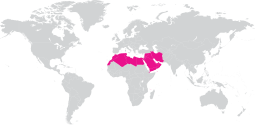


Special Olympics International (SOI) has officially opened the dialogue process for potential host cities and partners interested in bidding for the 2031 Special Olympics World Games—one of the most unique, inspiring, and socially impactful sporting events on the planet. This initial process is open to Special Olympics National Programs, as well as institutional stakeholders and governments interested in bringing the Games to their region.
The dialogue process is designed to explore and develop two critical elements required for a successful bid and the ultimate delivery of a world-class major event: the "Why" and the "How."

Defining the "Why"—Legacy and Impact
The process places a heavy emphasis on the "Why." SOI works together with potential bidders to understand their government strategy, long-term vision, and community goals. Together, SOI and the bidding committees curate a legacy strategy that aligns the event’s deep social impact with the host nation, the local region, and the global Special Olympics movement. It is a collaborative exercise built on the foundation of shared success.
Hosting the World Games has proven to be a powerful legislative and societal catalyst, unlocking long-term public benefits:
- Policy & Legislative Evolution: Hosting the Games drives permanent legal change. The legacy of the World Games Athens 2011 extended into national policy, with the Greek Government adopting measures to embed inclusive sport within its education system for students with and without intellectual disabilities. Similarly, Ireland’s 2003 World Games prompted a £50 million government grant to disability services and the passage of landmark disability rights legislation.
- Shifting Public Perceptions: The World Games fundamentally transform societal attitudes. In South Korea (2013), public understanding of intellectual disabilities plummeted barriers, skyrocketing from a baseline of 2% to 71.9% post-World Games. Following Berlin 2023, 55% of the public following the World Games noted it positively enhanced their perception of people with disabilities.
- Lasting Social Programs: The World Games 2019 in Abu Dhabi established a regional milestone by integrating inclusion values directly into the curriculum of every public and private school in the country, alongside a donation of AED 5 million (£1.2 million) instate-of-the-art medical equipment to the local health department.
Constructing the "How"—Technical and Financial Viability
The "How" centers on the technical development of the bid. During this phase, SOI partners closely with potential host committees to build a sustainable funding model and a robust technical plan, ensuring the infrastructure and resources are in place to support an event of this magnitude.
The Special Olympics World Games are designed to utilize existing infrastructure to optimize economic returns, workforce development, and tourism:
- Substantial Economic Return: The World Games Berlin 2023generated a direct economic value-add of €81.5 million for the city, translating to an overall multiplied economic impact of €255.1 million. In 2015, Los Angeles County saw an estimated $415 million USD in total direct and induced spending, generating $15.1 million in state tax revenue.
- Immediate Tourism Influx: The World Games provide immediate injections into the local hospitality sector. Berlin 2023 attracted 23,100 unique overnight visitors staying an average of 6 nights and spending a median of €145 per night—injecting €3.1 million straight into hotels and €1.6 million into gastronomy. Abu Dhabi 2019 captured AED 78 million (£18.2 million) in Gross Value Added strictly from overseas tourist expenditures.
- Workforce & Volunteer Capital: Hosting builds a highly trained local workforce. Abu Dhabi broke regional records by engaging a sustainable legacy network of over 21,000 volunteers and embedding 67 public and private sector secondees as long-term inclusion ambassadors. In the Healthcare industry, over 600 medical personnel from across the UAE were trained to work with people with IDD as part of the Healthy Athletes Program.

The Athlete Perspective
While the measurable economic and policy returns are substantial, the ultimate ROI of a World Games is the profound, lifelong transformation of the individuals at the center of the movement.
As Kiera Byland BEM, Special Olympics Great Britain Athlete and Special Olympics International Board Member, reflects, “To be chosen to represent my Country to be the best that I could be, was such an honour, I went to win and I did, but it became so much more than that; I gained lifelong friendships, it gave me a sense worth, recognition that I could be successful, to show me that dreams do come true. It gave me a platform to finally have a voice that was accepted, as an Athlete and now as a Leader, and it gave me the opportunity to gain professional skills and grow personally. I wouldn’t be who I am today without the Special Olympics World Games.”
A Legacy of Global Impact
Over the 58 years since the inaugural Games in Chicago in 1968, the Special Olympics World Games has evolved into a premier global sporting event. Today, it serves as a powerful catalyst for social change, driving progress across multiple United Nations Sustainable Development Goals (SDGs)—particularly in the realms of sport, education, health, and social inclusion.
The mass appeal of the World Games offers a high-visibility platform for host nations. Berlin 2023 generated a staggering 10.9 billion event impressions globally via media powerhouses like ARD, ZDF, and ABC. This builds upon the legacy of Abu Dhabi 2019, which reached 760 million households across 183 countries with 69.1 billion total media impressions.
The upcoming World Games Santiago 2027 will be the first in South America and will continue this legacy featuring:
- More than 6,000 athletes and Unified Partners
- 170 countries represented
- 10,000+ volunteers
- 2,000 media professionals
- 5,000 family members
- 23 sports
The 2027 World Games are on target to reach a historic milestone by achieving gender equity with 50% female participation for the first time in World Games history.
This momentum builds directly on the success of the World Games Berlin 2023, which saw incredible global engagement, broke broadcasting milestones, and united thousands of athletes with intellectual disabilities on a world stage, proving once again that inclusion has no boundaries.
Join the Dialogue
The 2031 Special Olympics World Games represent an opportunity for nations to shape a more inclusive future through sport. Special Olympics International welcomes visionary partners ready to create lasting impact on a global stage. It is an event that the Sport, Health, Education and Social Development leadership in your country can contribute to and leverage to deliver their strategic initiatives.
Organizations, National Programs, and institutional stakeholders ready to explore this unique opportunity are encouraged to take the first step. Visit the website to learn more about Special Olympics events. To initiate the dialogue process or to request further information on the 2031 bidding requirements, please contact Lou Lauria, Chief of Sport and Competition at Special Olympics International, to begin the conversation.


