

From 25 February to 2 March, leaders from Special Olympics Health, alongside the Golisano Foundation, set out on a whirlwind week of site visits across Ireland. The goal was to experience the diversity of inclusive health programming offered throughout the country and to meet with the athletes and leaders making this work possible.
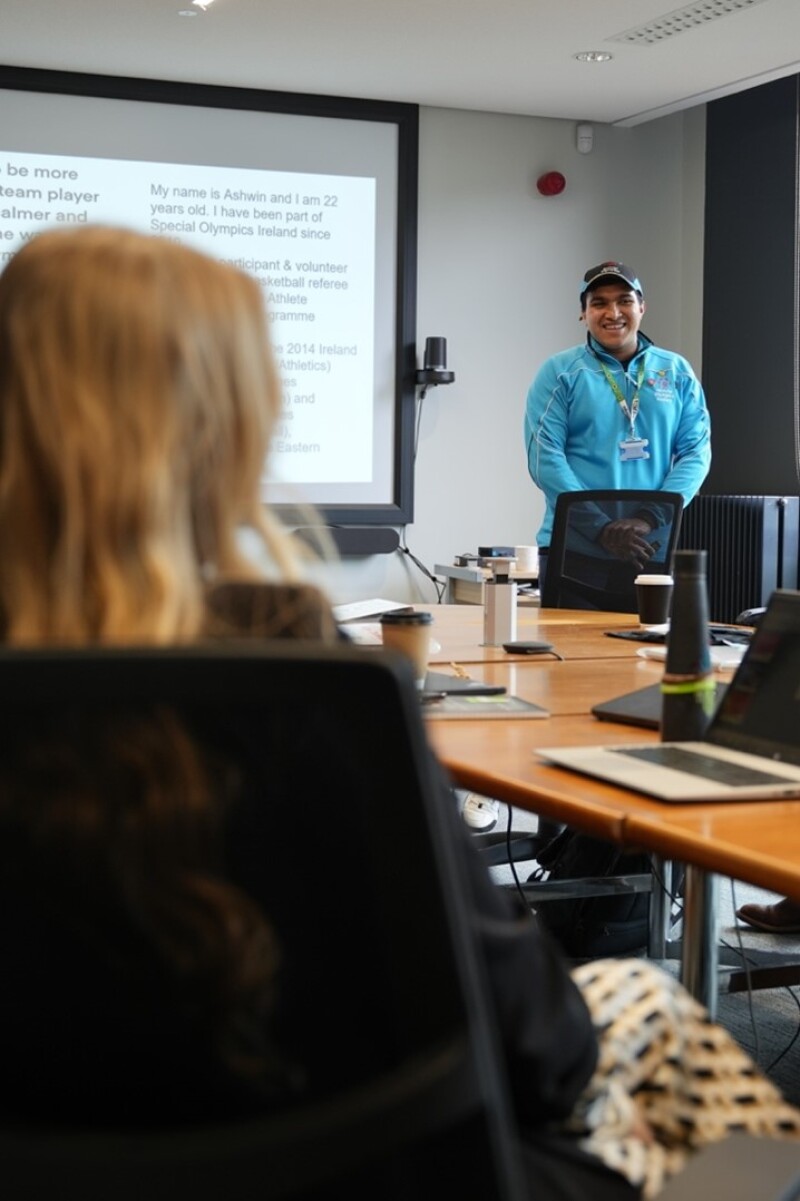
The week kicked off at Special Olympics Ireland’s head offices in Dublin with a series of presentations demonstrating the breadth of work and partnerships SO Ireland is advancing to support athletes and influence health policy toward more inclusive systems.
Special Olympics Health Messengers were front and center throughout the day. Ashwin Maliyakal, a 22 year old basketball athlete and Special Olympics Ireland ambassador, shared his involvement with the Health Service Executive (HSE), Ireland’s publicly funded healthcare system, and St. Michael’s House, a special education school in Dublin, to develop a digital and physical health passport for people with intellectual and developmental disabilities (IDD). This passport provides individuals with a personal record of their health needs and conditions, helping inform healthcare providers about specific concerns and considerations. Since it’s development, the passport has been regarded as a promising practice which could be adopted in other countries to improve inclusion in healthcare provision.
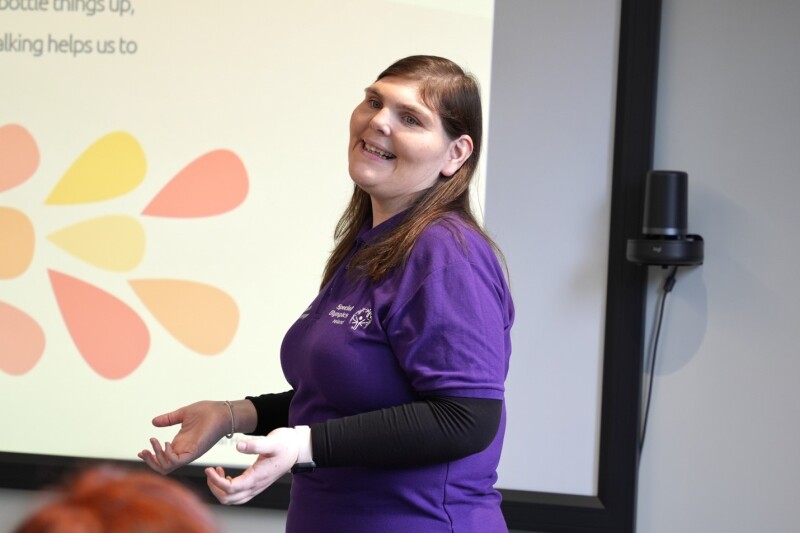
Reflecting on all the presentations of the day—but especially those of Ashwin and Margaret, Special Olympics Chief Health Officer, Dr. Dimitri Christakis shared the feelings of gratitude and pride the day left him with. “Every time I see our Health Messengers I’m humbled by how they speak about our message,” Christakis shared. “Nobody spreads the message of inclusion better than they do. They speak for themselves, they speak to the movement, and they speak to anyone with intellectual and developmental disabilities. Their stories are really a testament to what anyone can do when given the opportunity.”

Following the presentations, the site visit group traveled north to Belfast to visit the Ulster University campus. Ulster University is a research institution setting a new national and global standard for inclusive health education, research, and community partnerships. For these commitments and more, Ulster was honored with the 2025 Golisano Health Leadership Award—the highest honor given by Special Olympics Health, recognizing one individual or organization from each of the seven Special Olympics regions for leadership in inclusive healthcare. During the visit, the Special Olympics and Golisano teams saw this impact firsthand through a dinner with Vice Chancellor Professor Paul Bartholomew and Provost Cathy Gormley Heenan, as well as a tour of the School of Health Sciences to learn about Ulster’s commitment to training inclusive health professionals and improving the health of people with IDD in the community.
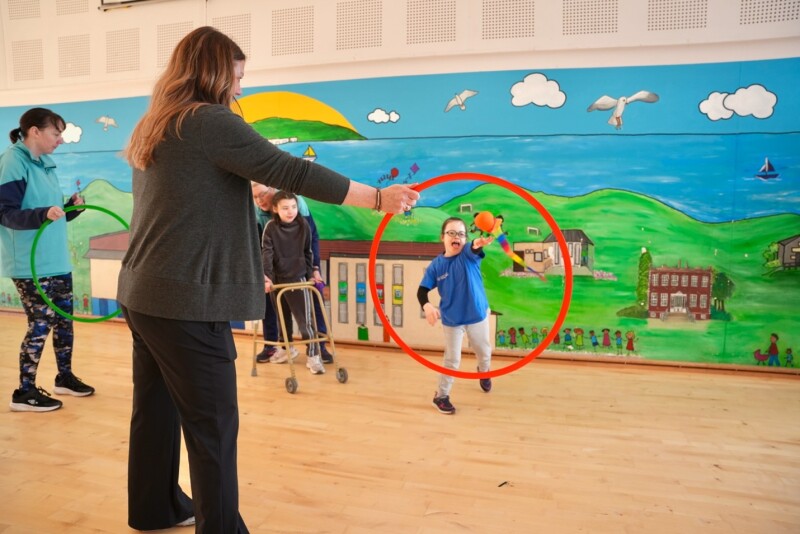
Once the Ulster visit wrapped, the group headed back to greater Dublin to visit a local Young Athletes training club, where children ages 2 – 7, with and without IDD, came together with their families for an afternoon of play. Throughout the demonstration, children and families practiced throwing and catching, kicking a ball, and navigating an obstacle course—foundational skills that support developmental milestones and set the stage for future sports engagement.
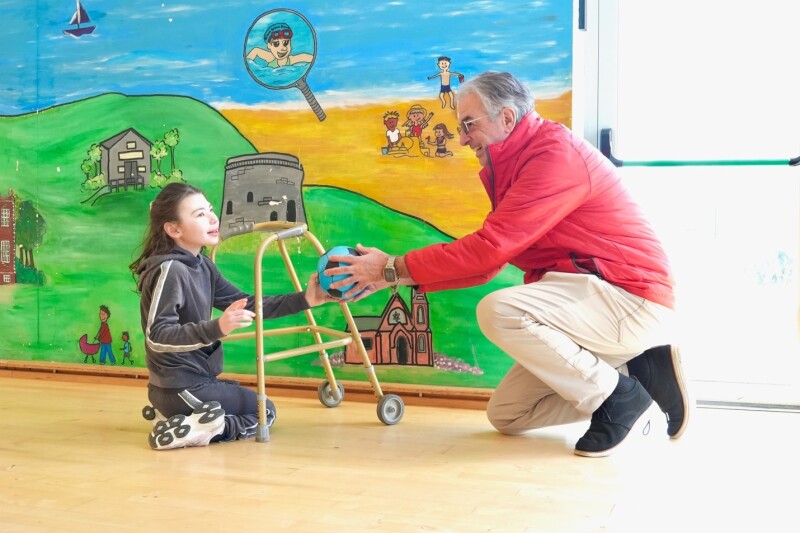
The final day of the site visit was perhaps the busiest of all. The morning began with an observation of the first Motor Activity Training Program (MATP) session for athletes selected to compete at the upcoming Special Olympics Ireland National Games, taking place 18 – 21 June 2026. MATP is a movement-based sport program designed for athletes with high support needs. Sessions focus on developing mobility, dexterity, striking, kicking, and balance through sport-related activities in an environment that fosters joy without comparison to others. During the session, Special Olympics and Golisano visitors joined in the activities, interacting and participating alongside athletes. Among the participants was Golisano Foundation Executive Director Erica Dayton, who reflected on the experience, “Observing the MATP session with the athletes was one of the most memorable moments of the visit. Sessions like that remind us why inclusive health matters; every person deserves the opportunity to participate, be supported, and reach their full potential. The energy, encouragement, and joy in the room showed exactly what inclusive communities can look like.”

To close out the visits, the group headed to Trinity College Dublin to learn about ongoing research and advocacy focused on the health of people with IDD. Trinity is one of the leaders implementing the Rosemary Collaboratory initiative in Ireland, which aims to accelerate efforts to address global health inequities experienced by individuals with IDD. This initiative includes 11 participating sites across nine countries. Trinity professor Sean Healy, who leads the Rosemary Collaboratory site in Ireland, shared details on how the team is leveraging research to improve health access and outcomes for people with IDD nationwide. Additionally, Professor Eilish Burke and her team presented their work on IDS‑TILDA (Intellectual Disability Supplement to The Irish Longitudinal Study on Ageing), a study examining the health, aging, and wellbeing of adults with intellectual disabilities in Ireland.
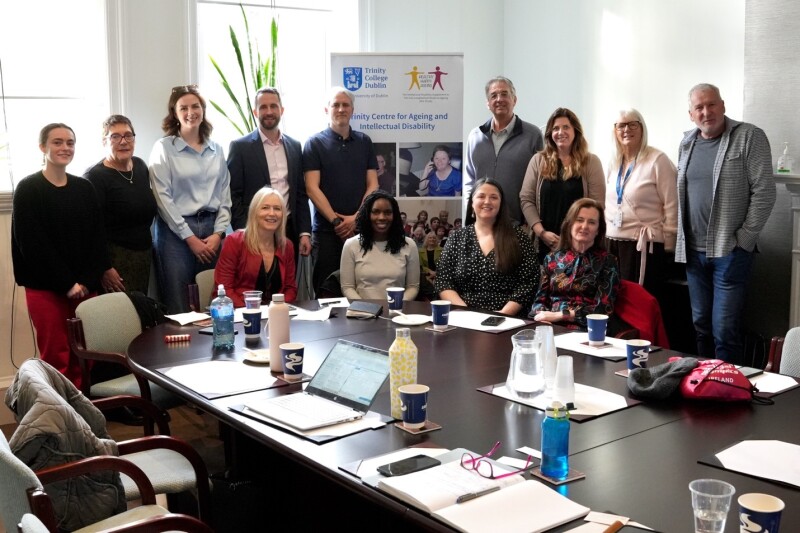
Together, these site visits showcased the powerful, holistic ways Special Olympics Ireland—working alongside universities, government entities, and civil society partners—is advancing inclusive health throughout the country. Through these efforts and more, Ireland exemplifies the Special Olympics vision of Special Olympics Healthy Communities, which acknowledges that inclusive health cannot be achieved through a single approach but instead requires connected and collaborative across communities.
For Dr. Christakis, the site visits were a testament to what is possible through the Golisano Foundation’s support of Special Olympics. “The Golisano Foundation has been transformative for us,” Christakis reflected. “Special Olympics Health work globally would not be possible without their ongoing support. When I see how programs like Special Olympics Ireland are growing and innovating to support people with IDD, the impact of Golisano is clear.”
Erica Dayton echoed the impact she observed firsthand throughout the week, “Experiencing these programs firsthand and spending time with the athletes and leaders behind them was incredibly meaningful. Seeing athletes, educators, researchers, and community leaders across Ireland driving this work forward is both inspiring and a powerful reminder of what’s possible. What’s happening across Ireland shows how powerful collaboration can be in advancing inclusive health and creating communities where people with intellectual and developmental disabilities are truly supported to live healthy, fulfilling lives.”